When Pool Water Must Be Drained After a Florida Storm
Meta Description: Learn when storm-damaged pool water needs draining, when cleaning is enough, and why Brevard County homeowners should avoid emptying a pool without professional guidance.
Most storm-damaged pools do not need to be drained. Leaves, branches, cloudy water, and diluted chemicals can often be corrected with professional cleaning, filtration, and water balancing. Still, some problems, especially contamination or water chemistry that will not stabilize, may require partial draining and refilling.
After hurricanes, tropical storms, and long periods of heavy rain, we recommend assessing the water and equipment before making big changes. Brevard County’s rainy season and October storm activity can place extra strain on pools, but draining should never be the automatic first step.
Start with a Safe Post-Storm Pool Assessment
Safety comes before cleanup. Storm damage can affect electrical equipment, pool enclosures, plumbing, and the equipment pad. If you see damaged wiring, wet electrical components, or downed power lines nearby, stay clear of the area until it can be inspected safely.
Once conditions are safe, look over the pool and surrounding area for signs that stormwater caused more than a normal debris problem. We commonly check for:
- Large branches, leaves, mud, and sediment
- Cloudy water, algae growth, or unusual odors
- Oil, fuel, or a rainbow-colored sheen on the water
- Water sitting above the skimmer opening
- Damage around the pump, filter, heater, or pool enclosure
Heavy rain can dilute sanitizer and throw off pH, alkalinity, calcium hardness, and stabilizer levels. A pool may look fairly clear while still having water that is out of balance. That is why we recommend professional water testing after a major storm, especially if the pool was already struggling before the rain arrived.
During an inspection, we can evaluate the water chemistry and check whether the circulation system is working as it should. That assessment helps determine whether your pool needs cleaning and treatment, equipment attention, or water replacement.
Know the Signs That Draining May Be Necessary
A partial drain may be appropriate when rainwater has changed the pool chemistry so much that normal adjustments no longer hold. For example, a pool with low calcium hardness, high total dissolved solids, or excessive cyanuric acid may not respond well to repeated chemical treatments. In those cases, replacing some water can give the pool a cleaner starting point.
Contamination is another serious concern. If floodwater, sewage, chemical runoff, fuel, or other hazardous material enters the pool, keep everyone out of the water. Surface cleaning and disinfection may work in some situations, but severe contamination can require lowering the water level, cleaning affected surfaces, and refilling with fresh water.
Persistent water problems also deserve a closer look. If the pool stays green, cloudy, foamy, or prone to recurring algae after proper cleaning and filtration, the water may be difficult to recover reasonably. Rather than adding product after product, we can determine whether a pool draining service is the better solution.
Avoid Emptying a Florida Pool Without Guidance
Fully draining an in-ground pool after a Florida storm can create a much bigger problem than dirty water. Heavy rainfall can raise groundwater around the pool shell. Once the water inside the pool is removed, pressure from the ground can push upward against the structure.
That pressure can cause an empty pool to lift, shift, crack, or suffer other structural damage. The risk depends on the pool type, the surrounding soil, recent rainfall, and the condition of the pool itself. Vinyl-liner, fiberglass, and concrete pools all react differently when water is removed.
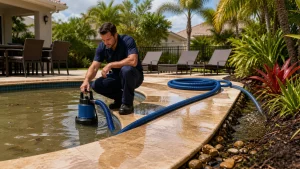
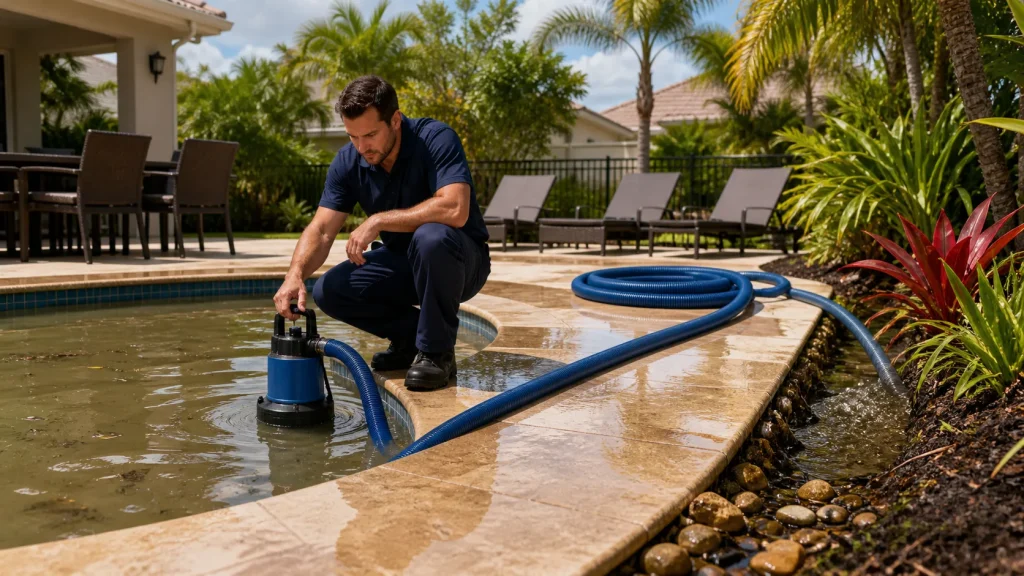
A professional evaluation helps determine whether water should be lowered at all and, if so, how much. Drainage also needs to be handled carefully so water does not flow into a neighbor’s property, damage landscaping, or create a problem in areas affected by pool chemicals.
Leaves and cloudy water alone are not reasons to empty a pool. In most cases, debris removal, vacuuming, filter service, and water balancing are safer options than a full drain.
Restore Filtration and Balance Before Swimming Again
For pools that do not need water replacement, recovery usually starts with removing debris and restoring circulation. Storm debris can clog baskets, block skimmers, overload filters, and keep the water from clearing. A pool can remain cloudy even when the chemistry is corrected if the equipment cannot move water properly.
Our post-storm cleanup process may include:
- Removing leaves, branches, and surface debris
- Brushing walls, steps, and problem areas
- Vacuuming mud and settled sediment
- Emptying baskets and servicing the filter as needed
- Testing and correcting sanitizer and balance levels
Equipment inspection matters just as much as cleaning. A damaged pump lid, clogged filter, flooded equipment pad, or electrical issue can prevent the pool from circulating correctly. We inspect these parts carefully before expecting the water to clear.
Before anyone swims, the water should be clear, properly sanitized, and balanced. The circulation system should also be running reliably, with no signs of contamination remaining. Clear water can still be unsafe if sanitizer levels or water balance are off.
Address Storm Problems Before They Spread
Delaying post-storm pool care can allow small issues to grow into algae, equipment strain, and water-quality problems. A prompt assessment helps separate a routine cleanup from the situations where partial draining is genuinely needed.
If the pool has contamination, unstable chemistry, or circulation trouble, the safest choice is to have the condition evaluated before lowering the water level. That approach protects the pool structure while helping restore clean, dependable water after severe weather.
Restore Your Pool With Confidence
For hands-on help after a Florida storm, schedule a pool draining service with 365 Pools. Our team can assess the water condition, handle the draining process properly, and help prepare your pool for recovery. Get professional support that keeps your pool care moving in the right direction.