Keep Your Pool Comfortable Before Cooler Florida Days Arrive
Slow heating, uneven water temperatures, strange noises, leaks, error codes, and rising energy use can all point to a pool heater problem. If your heater is acting differently than usual, it is better to have it checked before it stops working altogether.
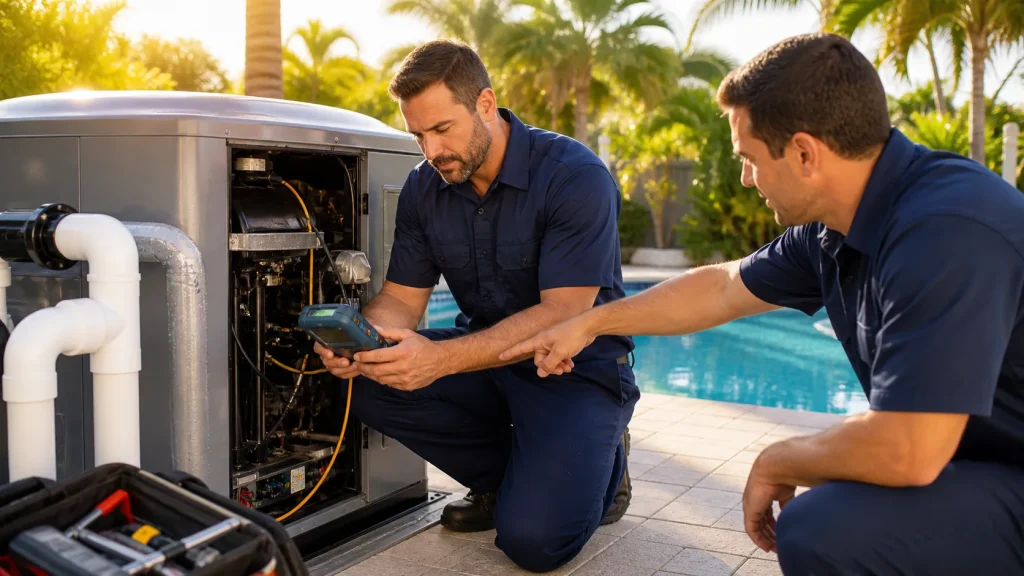
Pools in Brevard County get plenty of use throughout the year, but late fall and winter mornings can make heated water much more enjoyable. At 365 Pool Service, we help residential and commercial pool owners identify heater concerns early through professional inspections, diagnostics, and pool heater repair.
Slow Heating Is an Early Warning Sign
A healthy heater should raise your pool temperature at a steady pace. The exact timing depends on your pool size, heater size, desired temperature, circulation, and outdoor conditions. Still, a heater that runs for a long time with little improvement deserves attention.
Several issues may cause slow heating, including:
- A dirty filter that restricts water flow
- Clogged heater components or circulation lines
- A thermostat that is reading water temperature incorrectly
- Worn heating elements in an electric heater
- Ignition trouble in a gas heater
Water may naturally lose heat after a cooler spell or a cloudy day. The concern is when the heater cannot catch up even after the filter is clean, the water level is normal, and the pump is circulating properly. When that pattern continues, we recommend professional pool heater repair rather than waiting for a full breakdown.
Temperature Swings and Error Codes Need Attention
Water that feels warm one minute and noticeably cooler later can signal a heater that is shutting down during operation. In our experience, these temperature swings may relate to a failing thermostat, sensor trouble, poor circulation, an electrical fault, or an internal part that overheats and turns the unit off.
Your heater’s control panel can also provide useful clues. Make a note of any error code you see, even if the code disappears after the heater restarts. Those messages can help us narrow down possible issues involving pressure switches, temperature sensors, airflow, ignition, or built-in safety systems.
Avoid repeatedly resetting a heater that keeps showing errors or turning itself off. A reset may get the system running briefly, but it does not correct the underlying cause. Repeated shutdowns are a sign that the equipment needs a closer look.
Unusual Sounds, Leaks, and Odors Call for Service
Pool equipment should not demand your attention with loud or repeated sounds. Clicking during startup can be normal in some systems, but constant clicking, banging, grinding, whistling, or repeated ignition attempts are not sounds to ignore.
Watch for warning signs around the heater area, such as:
- Water collecting beneath or beside the unit
- Rust stains, corrosion, or damaged panels
- Moisture inside the equipment area
- A burning smell, smoke, or a tripped breaker
- The smell of gas near a gas-fired heater
Leaks can damage nearby components and lead to bigger equipment problems if they continue. If you smell gas near a gas-fired heater, leave the area immediately. Do not operate the heater, touch electrical switches or equipment, or use a phone near the suspected leak. From a safe location, contact the gas utility or emergency services. Smoke, burning smells, and electrical issues should also be treated seriously. Turn the heater off and have a qualified pool professional inspect the system rather than trying to restart it.
High Energy Bills May Signal Pool Heater Repair
When a pool heater uses more electricity or gas than usual, it may be working harder than it should. Poor water flow, heat loss, worn parts, dirty equipment, or incorrect settings can all make a heater less efficient.
A few simple checks can help you spot obvious conditions that affect heating performance. Make sure the filter is clean, the water level is where it should be, and the pump schedule gives the heater enough circulation time. Using a pool cover when appropriate can also help hold in heat, while frequent temperature changes can make the system work harder.
If your operating costs remain higher even after normal pool care is addressed, it is time for a professional inspection. We can evaluate heater performance and determine whether the issue involves a repair, a maintenance adjustment, or an equipment recommendation.
Get Pool Heater Help Before the Next Cool Front
Pool heater problems rarely improve on their own. Catching slow heating, shutdowns, leaks, noises, or error codes early can help you avoid losing comfortable pool time when seasonal temperatures dip. At 365 Pool Service, we provide pool heater diagnostics, repairs, equipment inspections, and ongoing pool services for property owners throughout Brevard County.
Before relying on your heater for the season, pay attention to how steadily it heats, how often it cycles, and whether it shows any new errors or sounds. Addressing small changes promptly is often the best way to prevent an unexpected heater failure.
Restore Reliable Pool Heat
If your system is showing signs of trouble, schedule pool heater repair with 365 Pools. Our team can diagnose the issue, explain the needed work clearly, and help restore dependable performance. Timely service helps keep your pool comfortable when Florida temperatures cool down.