OEM vs. Generic Salt Cell Replacements: How to Choose
Both OEM and generic replacement salt cells can work well. The right choice depends on your exact salt system, warranty status, budget, expected cell life, and whether the replacement is installed and programmed correctly.
A salt cell turns dissolved salt in your pool water into chlorine. That chlorine keeps the water sanitized without relying only on manually added chlorine products. Here in Brevard County, pools still need steady circulation and sanitation during the holiday season and throughout the milder months. Lower water temperatures may reduce chlorine demand, but a weak cell can still leave you with low chlorine, algae, and unbalanced water.
Know When Your Salt Cell Is Actually Failing
A warning light does not always mean you need a new cell. We often find that a salt system is reacting to a water chemistry problem, scale buildup, poor flow, or an equipment issue instead of a failed cell.
Common signs that may point to a worn salt cell include:
- Low chlorine levels even when the system is set to a higher output
- “Check cell” or “low salt” messages on the control panel
- White calcium scale on the cell plates
- Salt readings that change often or do not match the water test
- Needing to run the pump longer to keep chlorine in range
Several other problems can cause these same symptoms. Salt may be too low or too high. Stabilizer, calcium, pH, and other water readings can affect chlorine production. A dirty cell, aging sensor, flow issue, cold water, power center problem, or control panel malfunction may also trigger warnings.
Before replacing a salt cell for a pool, we recommend professional testing. Our team can check cell output, inspect the power center, confirm water balance, and look for scale or flow concerns. In some cases, cleaning or repairing the system makes more sense than replacing a part that still has usable life.
Compare OEM and Generic Replacement Value
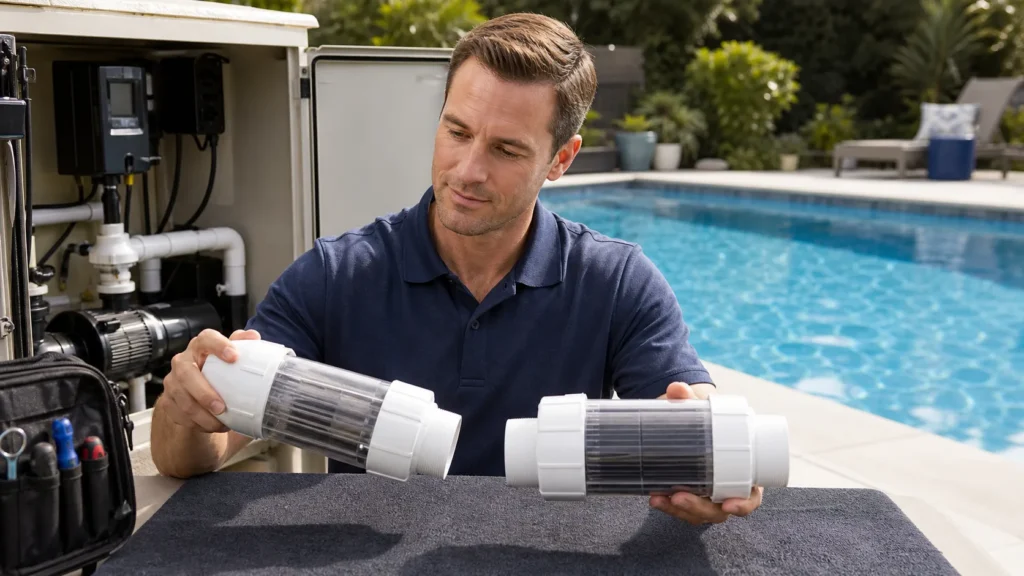
An OEM salt cell is made by the original manufacturer of your salt chlorination system. Because it is built for that specific equipment line, it usually provides predictable communication with the control panel, proper fit, and manufacturer-backed warranty coverage.
Generic, or aftermarket, salt cells are made by third-party manufacturers to work with select systems. These replacements can be appealing when you are trying to manage equipment expenses, especially if your pool system is older. Still, “compatible” does not always mean every replacement performs the same way.
Here is the practical difference we encourage homeowners to consider:
- OEM cells are designed specifically for the original system model
- Generic cells may offer a lower upfront investment
- Warranty terms can differ greatly between manufacturers and suppliers
- Cell life and chlorine output may vary based on build quality and pool conditions
- Correct installation matters for either option
A generic cell can be a solid choice when it comes from a dependable manufacturer and is matched exactly to your system. On the other hand, the lowest-priced option is not always the best long-term value if it produces chlorine poorly, has limited warranty support, or needs replacement sooner than expected.
Match the Replacement Cell to Your Pool System
The replacement cell must match more than the shape of the old one. We check the salt system brand, cell model, control panel, cable connection, and equipment settings before recommending a replacement. A cell that looks nearly identical may not communicate correctly with the existing control unit.
Pool size matters, too. Florida’s long pool season can place steady demand on salt equipment, especially when the water is used often or receives lots of sun. An undersized cell may need to operate at a higher output for longer periods, which can add wear and make it harder to maintain a proper chlorine level.
Before ordering a replacement, we suggest confirming:
- The exact model number on the existing cell and control panel
- Plumbing union size and flow direction
- Cable type and connection style
- System software or compatibility requirements
- Whether the cell is sized appropriately for your pool’s chlorine demand
Older systems deserve extra attention. Equipment updates, replacement parts, and control settings can affect which cell will work properly. A professional inspection helps prevent the frustration of installing a new part only to see the same warning light return.
Consider Warranty, Lifespan, and Total Ownership Cost
Salt cells commonly last several years, but their usable life depends heavily on how the pool is cared for. High calcium levels, frequent scale buildup, improper water balance, extended high-output settings, and harsh cleaning practices can all shorten a cell’s life.
OEM warranties are often more straightforward because the cell and system come from the same manufacturer. Generic cell warranties can still provide worthwhile protection, but the terms may vary. Some suppliers may have requirements related to registration, installation, proof of purchase, or the condition of the rest of the salt system.
When we help homeowners compare options, we look beyond the initial purchase decision. A lower-cost generic cell may be a smart fit when it has reliable performance and clear warranty coverage. But repeated replacements, weak chlorine production, or compatibility trouble can turn an inexpensive choice into a bigger expense over time.
Get the Right Salt Cell and Reliable Pool Care
OEM and generic cells can both be good options when they are correctly matched to the pool system. The best fit comes down to your equipment, warranty preferences, pool use, and how much confidence you want in the replacement’s compatibility.
If you are seeing recurring warning lights, low chlorine, visible scale, or confusing salt readings, the safest move is to test the whole system before replacing the cell. Balanced water, proper circulation, and correctly working equipment all help protect the new cell and keep your pool ready for year-round use.
Choose The Right Replacement With Confidence
At 365 Pools, we help homeowners compare compatibility, warranty coverage, and long-term value before making a replacement decision. Get professional guidance on the right salt cell for a pool and avoid paying for a part that does not match your system. Our team can help you make a clear, practical choice for dependable chlorination.