Understanding Pool Pump Motor Repair Before It Stops Working
Pool pump motor problems usually give you a warning before the system stops completely. A pump may get louder, move less water, run hot, leak near the motor, or need repeated resets before it starts. Paying attention early gives us a better chance to address the issue before poor circulation affects the rest of your pool equipment.
Here in Brevard County and Florida’s Space Coast, pools often run through every season. Heavy use, humidity, summer storms, and debris after rough weather can all put added pressure on pump motors. At 365 Pools, we help homeowners understand what these changes may mean and when professional pool pump motor repair is the right next step.
How Pool Pump Motor Repair Prevents Larger Failures
Your pump motor keeps water moving through the filter, heater, chlorinator, and other equipment. When the motor cannot run reliably, water may not circulate long enough for the pool system to do its job. Chemicals can become less effective, debris may remain in the water, and your pool can go from clear to cloudy much faster than expected.
A struggling motor can also put stress on nearby parts. Heat, vibration, poor water flow, or repeated start-up problems may affect seals, impellers, capacitors, electrical connections, and plumbing fittings. Continuing to run a pump that is clearly having trouble can turn a smaller repair into a larger equipment issue.
Poor circulation can lead to:
- Cloudy or dull-looking water
- Algae growth and more difficult water balancing
- Increased chemical demand
- Debris collecting in areas the circulation system is not reaching
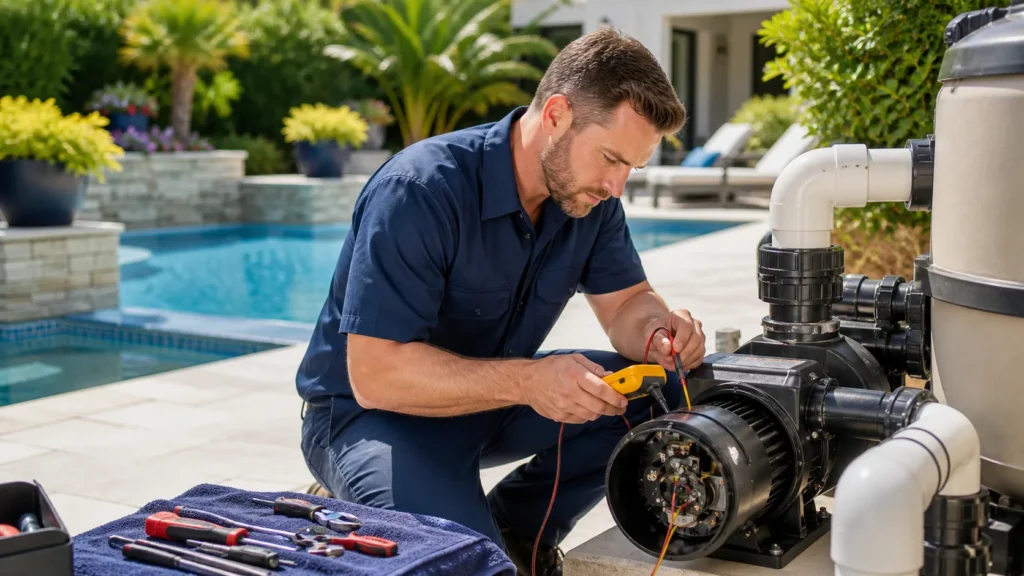
Before recommending pool pump motor repair, we look for the actual source of the problem. A motor concern can sometimes look similar to a clogged filter, blocked impeller, failing capacitor, or electrical issue. Proper troubleshooting helps us focus on the part that needs attention instead of guessing.
Know the Warning Signs of a Failing Pump Motor
Changes in your pump’s daily routine matter. A motor that once started smoothly but now hesitates, hums, or needs help getting going deserves an inspection. Small changes are often easier to address than a complete shutdown during a busy holiday week or before guests arrive.
Common warning signs include:
- Humming without starting
- Screeching, grinding, or unusually loud operation
- Frequent breaker trips
- A burning smell or excessive heat
- Slow startup, sudden shutoffs, or weak water flow
Grinding or screeching may point to worn bearings. Humming can be tied to a capacitor or electrical problem. A pump that shuts off unexpectedly may be overheating or dealing with a power-related issue. Reduced flow can also signal a restriction somewhere in the system, which is why a full inspection is helpful.
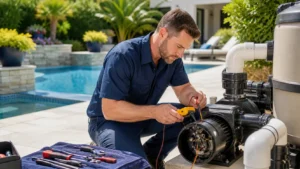
We recommend taking any electrical symptom seriously. Pool equipment combines water and electricity, so opening electrical components or attempting wiring repairs is not a safe homeowner project. A trained pool technician can inspect the motor, connections, and related equipment without putting you or the system at unnecessary risk.
Why Florida Conditions Wear Down Pump Motors
Florida’s heat, humidity, rain, and long pool season can be hard on equipment. Unlike areas where pool systems sit unused for long stretches, many Space Coast pumps operate throughout the year. That steady workload can expose aging motor parts, worn seals, and weak electrical components.
Storm season brings another layer of trouble. Windblown leaves and debris can fill baskets, restrict water flow, and make the pump work harder than it should. Power outages and surges can also affect electrical parts and motor performance. Around coastal areas, moisture exposure and saltwater pool environments may add to corrosion around equipment pads and connections.
A few simple habits can reduce avoidable strain:
- Keep water at the proper level for skimming and circulation
- Have skimmer and pump baskets emptied regularly
- Keep the equipment area clear of leaves and debris
- Arrange professional maintenance and post-storm system checks
After a major storm or extended power interruption, it is smart to pay close attention when the pump restarts. New noises, weak flow, or repeated breaker trips are worth addressing promptly.
Choosing Pool Pump Motor Repair or Replacement
The right answer depends on the condition of the motor and the rest of the pump. Some problems can be corrected without replacing the motor or the entire pump. A failed capacitor, worn seal, minor electrical issue, or certain serviceable motor parts may allow for a targeted repair.
Replacement may make more sense when corrosion is severe, bearings are badly damaged, the motor fails repeatedly, or the equipment is no longer a practical match for the system’s needs. Age, energy use, compatibility with the pump housing, and the condition of related parts all play a role.
Replacing a motor does not always mean replacing the whole pump. During an inspection, we can look at the pump housing, impeller, seals, plumbing connections, and electrical setup to determine what makes sense for your equipment. A clear assessment helps you avoid replacing more than necessary while also avoiding repairs that may not hold up.
Address Pump Problems Before They Shut Down Your Pool
Early attention can help prevent poor circulation, water-quality problems, equipment damage, and unexpected pool downtime. If your pump is noisy, overheating, losing flow, tripping breakers, or failing to start consistently, professional troubleshooting can identify the cause before the issue grows.
Reliable circulation supports cleaner water, safer swimming, and a pool that is ready for Florida’s year-round use. When a pump starts sounding or acting different, treating that change as an early warning can help protect the entire system.
Restore Reliable Pool Performance
If your pump needs attention, our team can diagnose the issue and recommend the right pool pump motor repair for your system. At 365 Pools, we inspect motor performance, electrical components, and circulation concerns to help identify the source of the problem. Get professional service before a minor repair turns into an equipment replacement.