A pool can be one of the best parts of buying a Brevard County home, but its condition deserves more than a quick look during a showing. A standard home inspection may point out visible concerns, yet it may not fully test circulation, equipment performance, leaks, water chemistry, or safety systems.
That is why we recommend arranging a pool inspection for homebuyers before the inspection contingency ends. Asking the right questions early can reveal repair needs, clarify what ongoing care may involve, and give you useful information for repair requests or seller credits.
Protect Your Purchase Before Closing
Florida pools work hard all year. In Brevard County, intense sun, humidity, heavy rain, storms, and coastal salt air can affect pool surfaces, water balance, and equipment. A pool that looks clear on the day you tour the home may still have concerns below the surface.
We encourage you to treat the pool as its own major system, much like the roof, plumbing, or air conditioning. A dedicated inspection gives you a clearer picture before you take ownership.
Start with a Pool Inspection for Homebuyers
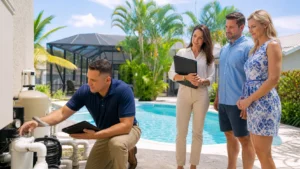
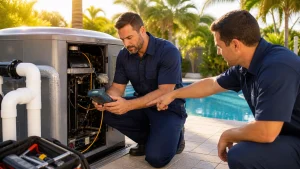
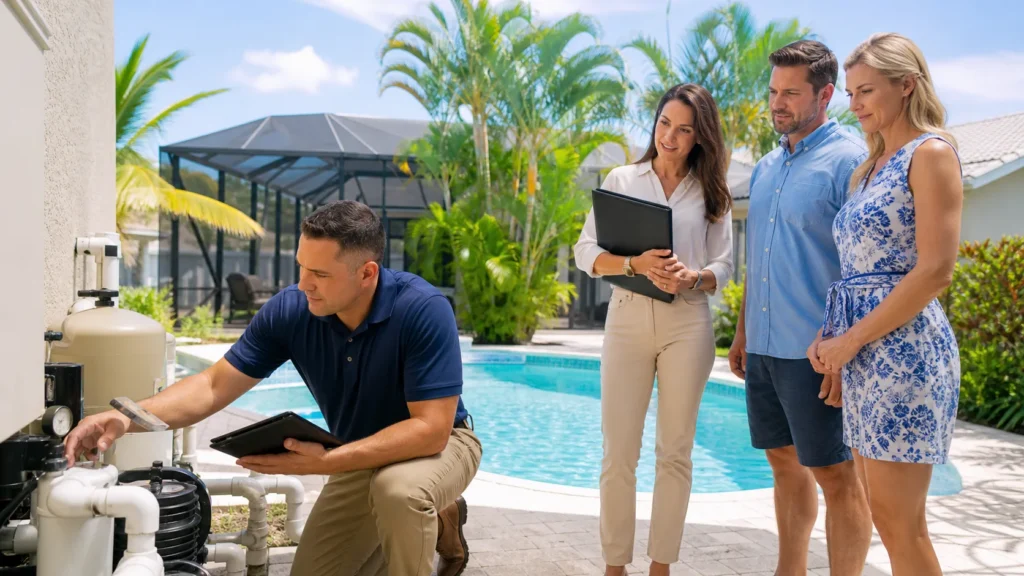
A professional pool inspection for homebuyers should look beyond the water itself. Our evaluations can include the shell, interior finish, tile, coping, deck, pumps, filters, heaters, plumbing, electrical components, automation, and safety features.
During the inspection, ask clear questions such as:
- What issues need immediate repair?
- Which parts may be nearing the end of their service life?
- Are there signs of leaks or improper installation?
- Are any electrical conditions unsafe?
Written findings matter. Request photos, a list of repair priorities, and clear next steps. This documentation can help you and your real estate agent discuss concerns with the seller while there is still time to negotiate.
Ask About Structure, Surface, and Leaks
The pool shell and finish can tell us a lot about its past care. Small cracks are not always structural, but they should never be brushed aside without a professional opinion. Ask whether cracks appear cosmetic or whether they may point to movement, settling, or a larger concern.
Pay attention to rough plaster, stains, peeling areas, loose tile, and coping that has shifted or separated. These conditions can affect both appearance and long-term maintenance needs.
Water loss deserves a closer look, too. Ask whether the water level seems to be dropping beyond normal evaporation and whether there are wet spots around plumbing lines or equipment. If the cause is unclear, a leak detection test may be recommended.
The surrounding deck also matters. During Brevard County’s rainy season and late-season tropical weather, drainage problems can become more obvious. Ask about:
- Deck cracks, settling, or trip hazards
- Standing water after rain
- Runoff that flows toward the pool or home
- Areas where the deck has pulled away from the coping
Test Equipment and Safety Systems
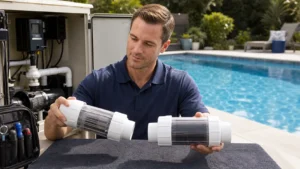
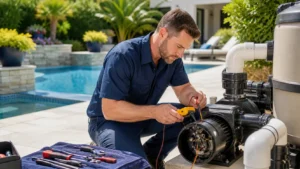
Pool equipment should be operated and evaluated, not simply viewed from a distance. A pump may turn on but still run loudly, struggle with circulation, or show signs of wear. Filters, heaters, valves, timers, and automation controls all deserve attention before closing.
We recommend asking for installation dates, service records, warranties, and repair history for major components. This includes pumps, filters, heaters, salt systems, chlorinators, and pool lights. Older equipment can still function well, but knowing its age helps you prepare for future replacement needs.
Safety features are just as important as equipment. Ask whether the pool has appropriate barriers, self-closing gates, secure handrails, safe drain covers, and properly functioning electrical protection. Any concern involving safety or electrical components should be reviewed by a qualified pool professional before you move forward.
Plan for Florida Weather and Ongoing Care
Before closing, ask the seller what routine care the pool has received and what the property typically needs to stay clean and balanced. Understanding maintenance routines, chemical needs, energy use, water use, and equipment condition helps you begin ownership with fewer surprises.
Brevard County pool owners also need to plan for conditions that can change quickly. Heavy rain can dilute the water, storm debris can block circulation, warm humid weather can encourage algae, and strong UV exposure can affect water balance. Homes closer to the coast may also need extra attention for corrosion on exposed equipment.
November may bring holiday plans and slightly milder days, but pool care continues. Ask whether the heater is operating properly for comfortable use, whether the pool is ready for late-season storms, and whether leaves or debris are affecting circulation. A pool should be maintained consistently, even when it is used less often.
Review Findings Before You Commit
A pool can add years of enjoyment to a Florida home when you understand its condition before closing. An inspection helps uncover concerns that are easy to miss during a walk-through, from aging equipment to drainage, leak, and safety issues.
Review the written findings carefully, ask follow-up questions, and allow enough time to request repairs, obtain professional recommendations, or discuss seller credits. A clear inspection report gives you a stronger foundation for making an informed decision about the home and its pool.
Know What Your Pool Needs Before Closing
For added confidence before you buy, 365 Pools can help you arrange a pool inspection for homebuyers that focuses on the pool’s condition, equipment, and potential repair needs. Our team understands the issues that can affect Florida pools, from aging pumps and leaks to storm-related damage. Get practical insight that helps you plan for ownership costs from day one.