Replace Your Pool Light Before a Small Problem Grows
Replacing a pool light before it fails is often the safer, more convenient choice when you notice water in the fixture, dimming, flickering, electrical interruptions, or an outdated light. Pool lighting is not only for looks. It helps you see steps, edges, and the water after sunset.
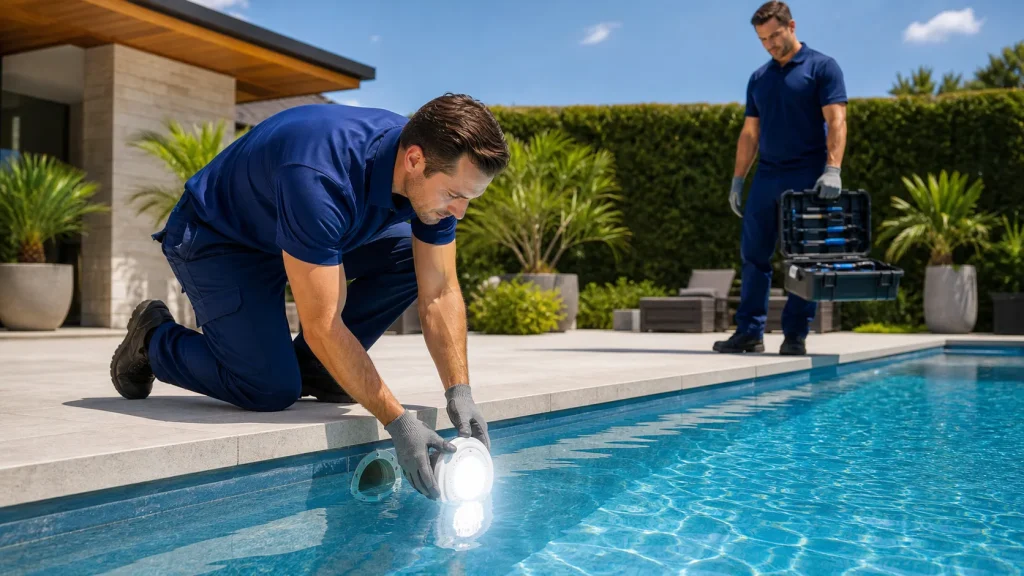
October is a good reminder to check your pool light in Brevard County. Evenings arrive earlier, pools still get plenty of use, and Florida’s humidity, rain, and tropical weather can expose weak seals and aging equipment. A professional inspection can tell us whether the problem involves a bulb, gasket, wiring repair, or full pool light replacement.
Pool Light Replacement Is Often the Safer Choice
A pool light needs to stay sealed and electrically sound in a wet environment. As fixtures age, parts can wear down. Gaskets may no longer seal tightly, lenses can crack, and metal components may corrode. Water can then enter the fixture or niche, leading to a more involved repair.
We recommend having the light inspected promptly if it behaves inconsistently. Do not keep using a pool light that trips a breaker, flickers, contains visible water, or turns on and off without warning.
Proactive replacement can help you:
- Plan service before the light stops working completely
- Keep the pool area visible for evening use
- Address a small seal or fixture concern before it worsens
- Update an older light that no longer provides enough illumination
Heavy rain, damp conditions, and frequent pool use can be tough on aging pool equipment in Florida. Replacing a worn light at the right time can be simpler than waiting until a dark pool area or electrical issue catches you by surprise.
Warning Signs Your Pool Light May Fail
Small changes in your pool light are worth noticing. A dim light may be nearing the end of its useful life, but it can also point to a fixture or electrical concern. The same is true when a bulb burns out more often than expected.
Watch for these common warning signs:
- Water droplets or condensation behind the lens
- Flickering, dimming, or a discolored light
- A light that will not turn on
- A breaker or GFCI outlet that repeatedly trips
- A cracked lens, loose fixture, or visible corrosion
Some problems are limited to a bulb. Others can involve the gasket, housing, cord, wiring, or electrical connection. We inspect the full setup rather than assuming the bulb is the only issue.
Never open, remove, or attempt to repair an underwater pool light while the system is energized. Instead, make a note of what you see. It helps to know whether the light flickers after rain, whether it fails at certain times, or whether power trips as soon as the switch is used. Those details can help us diagnose the issue more efficiently.
LED Pool Lights Bring More Than Brighter Evenings
Replacing an older incandescent or halogen pool light is often a good time to consider an LED upgrade. LED pool lights can use less energy, last longer than older lighting options, and provide bright, clean illumination. Depending on the setup, you may also choose a white light or color-changing option.
The right replacement depends on more than the look of the light. Before selecting a fixture, we consider the existing pool setup, including:
- The size and type of the current fixture
- Compatibility with the existing niche and wiring
- The condition of the cord and electrical connections
- How much brightness you want around the pool
- Whether you want a simple replacement or a broader lighting update
An inspection helps prevent the frustration of choosing a light that does not fit or function as it should. For many pool owners, this is also a practical time to modernize an older pool before holiday gatherings, evening entertaining, and night swims during Florida’s mild fall season.
Professional Pool Light Replacement Helps Avoid Bigger Problems
Pool lighting work involves electricity, water-tight seals, and parts that need to fit correctly. That combination makes professional service especially important. A light may appear simple from above, but the condition of the lens, gasket, fixture, cord, niche, and electrical connections all matter.
During an inspection, we look for signs of water intrusion, corrosion, loose components, damaged wiring, and problems with the surrounding equipment. From there, we can recommend whether a repair makes sense or whether pool light replacement is the better path.
Proper installation helps confirm that the new light is sealed, positioned correctly, and tested for reliable operation. Checking the rest of the pool equipment at the same time can reveal aging parts or maintenance needs before they develop into separate repairs. Addressing lighting concerns early supports safer, more reliable evening pool use.
Restore Safe, Reliable Pool Lighting
If your pool light is aging, dim, leaking, or no longer working consistently, our team can help you choose the right solution. 365 Pools provides professional pool light replacement services to restore visibility and improve your pool’s nighttime use. We’ll assess the fixture and connections, recommend the appropriate repair or upgrade, and handle the work with care.
Pool Lighting Questions Homeowners Commonly Ask
Is It Safe To Swim With A Pool Light That Does Not Work?
A light that simply does not turn on may have a bulb or power issue, but we do not recommend treating it as harmless until it has been inspected. If there is water in the fixture, flickering, breaker trips, or visible damage, keep the light off and have the electrical concern checked by a professional.
Does Water Inside A Pool Light Always Mean It Needs Replacement?
Not always. Water behind the lens can sometimes be related to a failed gasket or another repairable sealing issue. However, water can also damage internal components or point to a worn fixture. An inspection is the best way to determine whether repair or replacement is appropriate.
How Long Do Pool Lights Typically Last?
The lifespan depends on the type of light, how often it is used, the condition of its seal, and exposure to moisture. An LED light may offer a longer expected service life than an older incandescent or halogen option, but every fixture should be checked when it begins to dim, flicker, or show moisture.
Can An Old Pool Light Be Upgraded To LED?
Often, yes, but compatibility matters. The existing fixture size, niche, wiring, and electrical condition should be reviewed first. A professional can determine whether an LED replacement will fit and operate correctly with your pool’s current setup.
Can A Pool Light Issue Cause A Breaker To Trip?
Yes. A tripping breaker or GFCI can indicate a problem with the light, wiring, moisture intrusion, or another electrical connection. Do not repeatedly reset the breaker to keep using the light. Treat repeated electrical interruptions as a reason to have the system inspected before your next evening swim.